
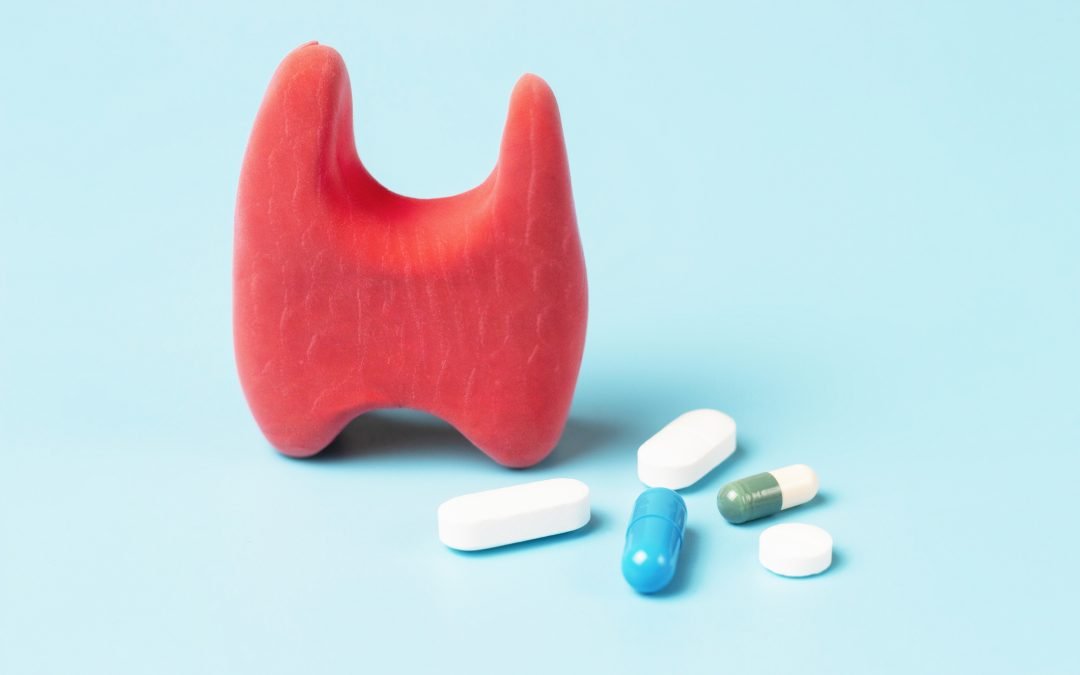
Every January, we recognize Thyroid Awareness Month — and it’s the perfect time to talk about a frustrating reality many patients live with every day:
- They’re taking thyroid medication
- Their lab work shows “normal”
- Their doctor says everything looks fine…
- But they still feel exhausted, foggy, cold, overweight, anxious, or depressed
If this sounds familiar, you are not alone. In fact, studies suggest that up to 1 in 4 people on levothyroxine (T4) still report ongoing hypothyroid symptoms even while being treated. So what’s really going on? Let’s connect the dots.
Why “Normal” TSH Doesn’t Always Mean You’re Well
Most people are diagnosed and monitored using only:
- TSH
- sometimes Total T4 or Free T4
But thyroid physiology is much deeper than that. Here’s the problem: TSH is a signal, not the final outcome. Your goal isn’t just “normal TSH” — your goal is:
- normal metabolism
- normal energy
- normal brain function
- normal hormones
- normal body temperature
- normal bowel movements
- normal quality of life
Many people have symptoms even when labs look “fine” because the labs used do not tell the whole story.
T4 Is Mostly a Storage Hormone — T3 Is the Active Hormone
This is one of the biggest missing pieces. Levothyroxine (T4) is not the active thyroid hormone. T4 is largely a prohormone (storage form). Your body must convert it into T3, the active hormone that drives:
- energy production
- mental clarity
- fat burning and weight control
- mood stability
- heart function
- gut motility
- hair + skin health
So why do people struggle on T4-only therapy? Because many patients don’t convert T4 → T3 efficiently. And if you can’t convert properly, you can have “normal labs” but still feel hypothyroid.
The Liver, Gut, and Kidneys Matter More Than Most People Realize
Thyroid care isn’t just about the thyroid gland. T4 → T3 conversion depends heavily on:
- Liver function (major conversion site)
- Gut health (also contributes)
- Kidney function (important conversion support)
If these systems are inflamed, sluggish, overburdened, or nutrient-depleted, conversion can suffer.
Subclinical Hypothyroidism: The “Almost Hypothyroid” State That Still Feels Miserable
A major group of patients fall into this category. They’re told: “Your thyroid is borderline, not bad enough to treat.” But they still experience symptoms like:
- fatigue
- brain fog
- weight gain or resistance to weight loss
- low mood or anxiety
- dry skin
- hair shedding
- constipation
- low libido
- cold intolerance
That’s why deeper testing and symptom-based evaluation is so important—especially during Thyroid Awareness Month when we want people to finally feel heard.
Nutrient Deficiencies Can Block Thyroid Function
Even with the right medication, the body needs key nutrients to support conversion and receptor function. Common thyroid-support nutrients include:
- Selenium
- Zinc
- Iron
- Vitamin A
- Vitamin D
- (among others)
If these are low, your “dose” may not be the real issue — your body may simply lack the resources to function optimally.
Hashimoto’s (Autoimmune Thyroid Disease) Is the Root Cause for Most Hypothyroidism
This is a massive overlooked point in conventional care. About 90% of hypothyroidism is caused by Hashimoto’s, an autoimmune condition where the immune system attacks the thyroid. But many patients are never tested for it. They’re given medication… but the underlying cause is ignored. To properly evaluate the cause, thyroid antibodies should be checked, including:
- TPO antibodies (TPO Ab)
- Thyroglobulin antibodies (TgAb)
If autoimmune thyroid disease is driving the issue, simply raising T4 may not fully restore health.
What Thyroid Labs Should Be Considered (Beyond TSH)
If you want a more complete picture, functional thyroid testing often includes:
- TSH
- Free T4
- Free T3
- TPO Ab
- TgAb
This helps identify:
- conversion issues
- subclinical patterns
- autoimmune triggers
- hidden hypothyroidism even with “normal” TSH
Why Adding Liothyronine (T3) May Be a Game-Changer
For some patients, the missing key is T3 support. Liothyronine (T3) can be helpful when:
- symptoms persist despite levothyroxine
- Free T3 remains low
- conversion is impaired
- patients feel “stuck” despite dose adjustments
But here’s the challenge: T3 has a short half-life, so immediate-release forms can feel like:
- energy spikes
- jitters
- crashes
That’s why many patients do better with sustained-release (SR) T3, which supports smoother levels.
Personalized Thyroid Dosing Is Often the Missing Link
No two thyroid patients are the same. At Towne Lake Family Pharmacy, we frequently help providers and patients with customized options such as:
- Sustained-Release Liothyronine (SR T3)
- Customized T4/T3 combination therapy
- Personalized microgram strengths
- Alternative dosage forms when needed
Personalization matters because thyroid dosing can be extremely sensitive — and “one-size-fits-all” doesn’t always work.
The Takeaway: You’re Not “Crazy” — You Might Be Under-Evaluated
If you’ve been told:
- “Your labs are normal”
- “It’s just stress”
- “You’re getting older”
- “Just eat less and exercise more”
…yet you still feel like your body isn’t functioning correctly, it may be time for a more complete approach that includes:
- full thyroid testing
- antibody screening
- conversion support
- nutrient evaluation
- gut/liver/kidney optimization
- personalized medication options
How Towne Lake Family Pharmacy Can Help
Julius, the Board-Certified Functional Medicine Expert at Towne Lake Family Pharmacy helps patients explore root-cause thyroid issues — especially when standard treatment hasn’t been enough. He’s a trusted resource for:
- hypothyroidism that doesn’t improve on levothyroxine
- Hashimoto’s autoimmune support
- deeper lab interpretation
- supplement + nutrient guidance
- personalized compounding strategies
If you’re still struggling with thyroid symptoms — even while on medication — you don’t have to keep guessing. Call 770-635-7697 and ask to speak with Julius about a thyroid-focused consultation and medication personalization options.